
lsomaqua@gmail.com
Call us :(+91) 9325925362
Minimum Order Quantity: 1 Unit
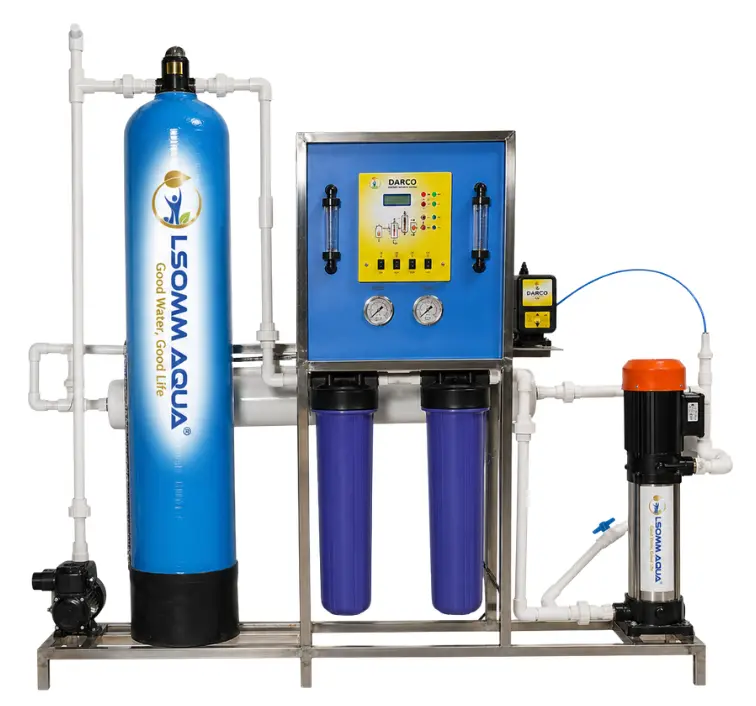
250 LPH Industrial RO Plant
Medium-sized businesses often struggle with inconsistent water quality, high TDS levels, frequent health complaints from staff or customers, and continuously rising costs of bottled water. A 250 LPH Industrial RO Plant provides the perfect solution by delivering up to 6000 liters of pure drinking water every day.
This compact yet powerful system is highly suitable for restaurants, schools, offices, small factories, and various commercial establishments across India. It effectively removes 95-99% of harmful contaminants including dissolved salts, heavy metals, bacteria, and viruses.
With more than 10 years of hands-on experience in industrial water treatment plant projects, we have helped many businesses in Lucknow and other cities successfully install and operate 250 LPH RO Plant systems. This comprehensive guide covers everything you need to know about the 250 LPH Industrial RO Plant.
A 250 LPH Industrial RO Plant is a medium-capacity reverse osmosis water purification system designed to treat 250 liters of raw water per hour. It is also commonly known as 250 LPH RO Plant, 250 liter per hour RO system, and compact industrial RO system.
This industrial water filtration plant uses advanced RO membrane water filtration system technology to produce consistent high-quality purified water suitable for commercial drinking and light industrial applications. These plants are built with durable components and often feature stainless steel RO water plant construction to ensure reliable performance even in tough Indian water conditions.
The Reverse Osmosis Plant operates through a systematic multi-stage purification process. Raw water first passes through pre-filtration stages where sediment filters remove physical particles and activated carbon filters eliminate chlorine, odors, and organic impurities.
A high-pressure pump then forces the pre-treated water through the industrial reverse osmosis system membranes that reject up to 99% of dissolved solids, heavy metals, bacteria, and viruses. The purified water finally undergoes post-treatment with UV disinfection and essential mineral addition to ensure it is safe, healthy, and pleasant in taste.
Automatic RO purification system models come with intelligent controls for real-time TDS monitoring and automatic operation, delivering good recovery rates between 50% and 70% while minimizing water wastage.
A reliable automatic RO purification system in the 250 LPH range includes solid technical specifications. These industrial drinking water treatment plant units can handle input TDS levels up to 3000-4000 ppm and consistently reduce it to safe drinking levels of 50-150 ppm.
The system typically features 3-4 high-rejection RO membranes, a powerful 1.5-2 HP multistage pump, and a sturdy stainless steel RO water plant frame for long-term durability. Most models operate on single or three-phase power supply and offer semi-automatic or fully automatic operation with necessary safety protections.
Businesses that install a 250 LPH Industrial RO Plant gain multiple important advantages. The system ensures a steady supply of pure water, completely reducing dependency on expensive bottled water and unreliable tanker supplies.
It protects the health of employees and customers by removing harmful impurities and prevents scaling in equipment such as boilers, chillers, and beverage machines. Most importantly, it offers excellent return on investment, usually recovering the cost within 8 to 15 months through significant savings.
Real Example: A busy restaurant in Lucknow installed a stainless steel RO water plant and successfully reduced their monthly water expenses from ₹12,000 to just ₹3,500 while receiving much better customer feedback on beverage taste and quality.
The industrial RO plant price for a 250 LPH Industrial RO Plant in India typically ranges from ₹80,000 to ₹1.8 Lakh. Basic FRP models are available at lower prices while fully automatic stainless steel RO water plant versions with premium membranes and controls cost more.
The final price depends on material quality, automation level, and the after-sales support provided by the industrial RO plant manufacturer. It is always better to focus on long-term reliability and service rather than choosing the lowest industrial RO plant price in India.
Selecting a trustworthy industrial water purifier supplier is crucial for satisfactory long-term performance. Look for an experienced industrial RO plant manufacturer with proper certifications and a strong service network in your city.
Always request raw water testing, client references, and a live demonstration before making a purchase. Reputed mineral water plant manufacturer companies also provide complete RO plant installation services and affordable annual maintenance contracts.
Proper installation plays a vital role in the performance of your industrial water filtration plant. A 250 LPH Industrial RO Plant requires approximately 12×12 feet of space with good drainage and stable power supply. Most suppliers provide professional installation support that is completed within 1 to 2 days.
Regular maintenance involves cleaning pre-filters every 15-30 days and regularly checking the output TDS level. In hard water regions like Uttar Pradesh and Rajasthan, adding a pre-softener is highly recommended to increase membrane lifespan. Annual maintenance costs usually stay between ₹12,000 to ₹25,000 depending on usage.
The 250 LPH Industrial RO Plant is an ideal choice for medium water demand requirements. While 100 LPH systems work for very small offices, the 250 LPH capacity performs excellently for restaurants, schools, coaching institutes, and small manufacturing units. Larger businesses with higher needs may prefer 500 LPH, 1000 LPH, or bigger systems. Selecting the correct capacity ensures optimal efficiency and cost-effectiveness.
A well-known coaching institute in India was facing repeated student health complaints due to poor municipal water quality. After installing a fully automatic 250 LPH Industrial RO Plant with mineralizer, they achieved zero water-related health issues, reduced monthly water costs significantly, and received excellent feedback from parents and students.
installation take? A: Professional installation of a 250 LPH Industrial RO Plant is usually completed within 1 to 2 days.
A 250 LPH Industrial RO Plant is one of the smartest and most practical investments for medium-sized businesses in India that require consistent, safe, and great-tasting purified water. It delivers excellent performance, strong return on investment, and complete peace of mind.
Ready to get pure water for your business? Contact us today for free water testing and a customized quote for the best 250 LPH Industrial RO Plant suited to your specific needs.
Q1: What is the price of a 250 LPH Industrial RO Plant in India?
A: The 250 LPH Industrial RO Plant price in India generally ranges from ₹80,000 to ₹1.8 Lakh depending on the material, automation level, and included features.
Q2: How much electricity does a 250 LPH RO plant consume?
A: A standard 250 LPH Industrial RO Plant consumes approximately 1.5 to 2.5 units of electricity per hour, making it energy efficient for commercial use.
Q3: Can a 250 LPH Industrial RO Plant handle high TDS water?
A: Yes, quality systems with advanced RO membrane water filtration system can effectively treat water with TDS levels up to 4000 ppm.
Q4: Is stainless steel better for 250 LPH RO plants?
A: Stainless steel RO water plant is more durable, hygienic, and highly recommended for long-term commercial applications.
Q5: How often should the RO membrane be replaced?
A: With proper maintenance, the membranes in a 250 LPH RO Plant usually last between 2 to 3 years.
Q6: Is a 250 LPH plant suitable for restaurants and schools?
A: Yes, it is an excellent choice for restaurants, schools, offices, and small industries that need 3000 to 6000 liters of purified water daily.
Q7: What is the recovery rate of a 250 LPH Industrial RO Plant?
A: Good quality models offer 50-70% recovery rate, which helps reduce water wastage significantly.
Q8: Do I need a pre-softener with a 250 LPH system?
A: In high hardness areas like Uttar Pradesh and Rajasthan, installing a pre-softener is strongly recommended for better membrane life.
Q9: What after-sales service should I expect?
A: Reputable industrial RO plant manufacturer provides professional installation, operator training, and affordable annual maintenance contracts.
Q10: How long does installation take?
A: Professional installation of a 250 LPH Industrial RO Plant is usually completed within 1 to 2 days.
At Lsomm Aqua Solutions, we are committed to delivering advanced water purification systems that ensure safe, healthy, and great tasting drinking water for your family.
Get the right water purification solution for your home or office.